BNSF’s $3.2 Billion Bet on Phoenix: What the Mega-Rail Hub Means for Cross-Border Freight
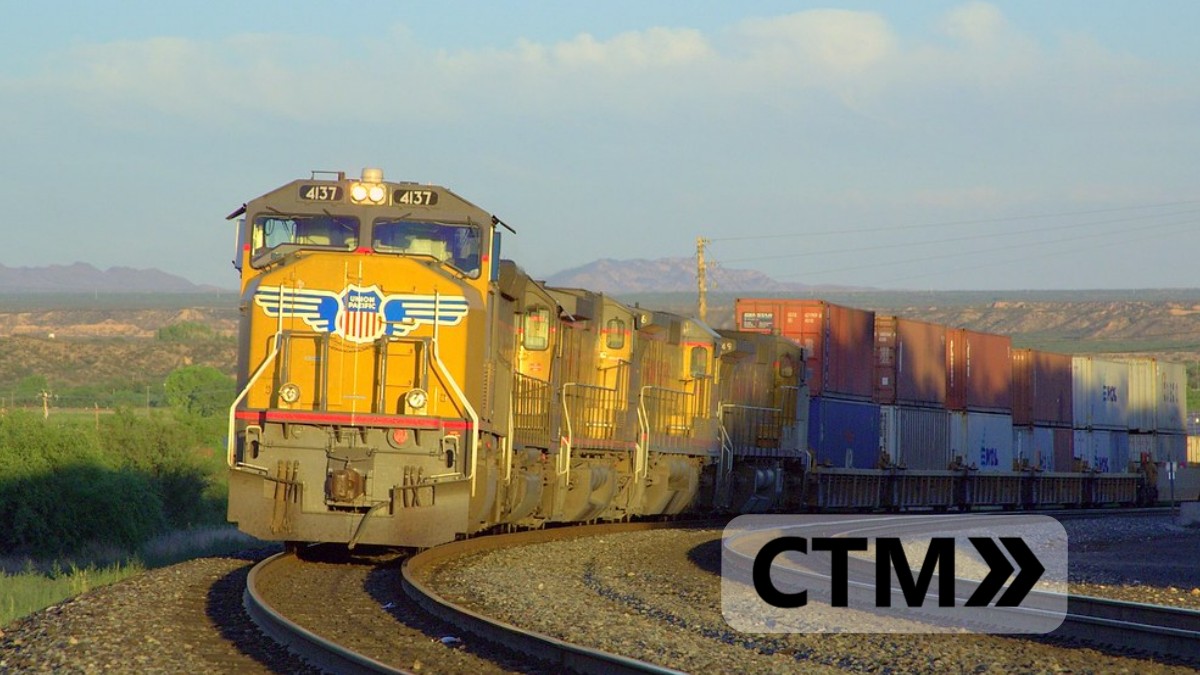
The supply chain map of the American Southwest is about to be redrawn.
BNSF Railway is pushing forward with plans for Logistics Park Phoenix (LPP)—a massive, 4,320-acre, $3.2 billion rail-centric hub located just northwest of Phoenix in Wittmann. Designed to handle over half a million containers annually by 2050, LPP is a direct response to West Coast port congestion, the Arizona semiconductor boom, and the massive wave of nearshoring into Mexico.
But a project of this magnitude doesn't happen overnight. Right now, the development is in the middle of intense local negotiations. Here is a look at where the project stands, how it will impact the local trucking market, and what it means for cross-border shippers.
The Negotiations: A Fight Over Infrastructure
Currently, LPP is facing friction at the local level. Late last year, Maricopa County officials unanimously rejected the initial rezoning requests. The pushback from the local community isn't strictly anti-growth; it is a complex negotiation over resources.
A logistics park of this size is projected to generate up to 22,000 daily vehicle trips. Local residents and officials are demanding clear answers on who will foot the bill for the massive road upgrades, water infrastructure, and power grids required to support it.
This type of pushback is standard for mega-infrastructure projects. Eventually, a compromise will be struck because the macroeconomic demand for freight capacity in Phoenix—driven by tech manufacturing and cross-border trade—is simply too large to ignore.
The Impact on the Trucking Business
When LPP eventually breaks ground, it will fundamentally alter the trucking landscape in Arizona and Sonora in two major ways:
- Changes in the LA-Phoenix Long Haul: Currently, a massive amount of freight is trucked directly from the ports of Los Angeles and Long Beach along the I-10 corridor into Phoenix. LPP will shift that volume onto intermodal rail.
- The Rise of Regional Drayage & Cross-Border Freight: While long-haul trucking from the coast will decrease, the demand for short-haul and drayage trucks will skyrocket. The rail hub will act as a massive inland port, meaning tens of thousands of containers will need specialized trucks to move them from Wittmann to local Phoenix distribution centers, and crucially, straight down the I-19 corridor into Sonora, Mexico.
The Freight Forwarding Advantage: Why CTM is Ready
For a pure, long-haul trucking company, a massive rail hub is a threat. But for CTM, it is an opportunity.
Because we operate as both a freight forwarder and an asset-based carrier, we do not just move trucks; we orchestrate supply chains. The introduction of LPP gives us a powerful new multimodal tool to offer our clients.
When freight arrives at the West Coast ports, we can manage the intermodal rail booking to move it efficiently into Phoenix, bypassing highway congestion. But here is the difference: instead of handing your container off to a third-party drayage broker once it hits the rail yard, our hybrid model takes over.
CTM trucks will be waiting at the terminal to pick up your freight and drive it directly to your manufacturing facility. By combining the cost-efficiency of rail with the security and speed of our asset-based fleet, we offer an unbroken, highly visible chain of custody.
The infrastructure of the Southwest is evolving. As the region transforms into a multimodal powerhouse, you need a logistics partner who can see the whole board.
>> Contact CTM today to future-proof your multimodal and cross-border freight strategy. <<