The Q2 Diesel Spike: How to Insulate Your Supply Chain from Spot Market Panic
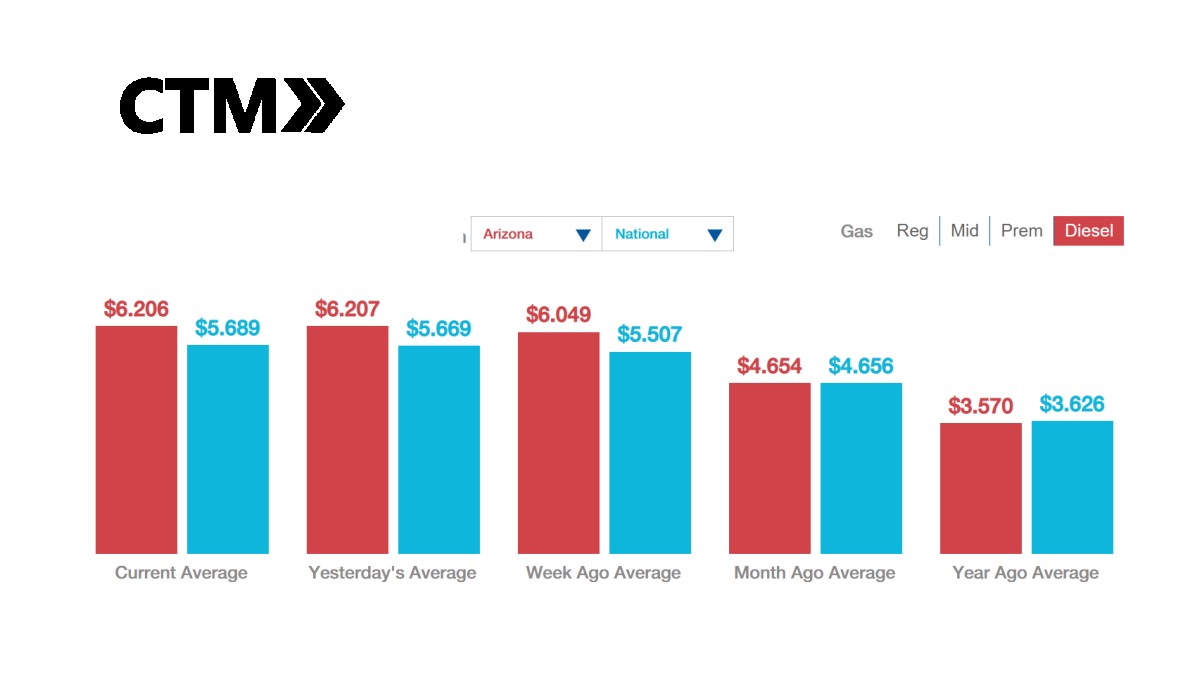
The start of Q2 2026 has delivered a harsh reality check to the logistics industry. Escalating geopolitical tensions in the Middle East and ongoing disruptions in the Strait of Hormuz have sent global energy markets into a tailspin.
With crude oil surging back toward $100 a barrel, U.S. diesel prices have spiked violently. National averages have pushed past $5.40 a gallon, with regions like California seeing diesel top an agonizing $7.50 at the pump. For supply chain managers, this rapid fuel inflation triggers an immediate crisis: the collapse of predictable freight pricing.
Here is how the current fuel spike is exposing the flaws of the open logistics market, and why smart shippers are leveraging asset-based partners in the Arizona-Sonora corridor to survive it.
The "Broker-Only" Spot Market Panic
When fuel costs jump by more than 20 cents per mile in a matter of weeks, the open spot market descends into chaos.
Digital brokers and non-asset platforms do not actually own the trucks moving your freight; they buy capacity on the open market. When independent operators panic over the price of diesel, brokers immediately pass those inflated costs—along with emergency fuel surcharges—directly to shippers to protect their own margins. If you rely on a broker during a global oil shock, your transportation budget becomes completely unpredictable.
The Nearshoring Geographic Advantage
The current crisis also highlights the massive risk of trans-oceanic supply chains. If you are importing components from Asia, you are not just paying for more expensive bunker fuel—you are paying massive war-risk insurance premiums and dealing with the delays of rerouted container ships.
Conversely, a nearshored supply chain in Hermosillo, Sonora, relies on a 250-mile land bridge to Phoenix. While no logistics operation is entirely immune to the cost of diesel, a short-haul truck run across the U.S.-Mexico border is vastly less exposed to global macroeconomic shocks than a container ship navigating international waters.
The CTM Asset-Based Solution
Surviving a fuel crisis requires stable, reliable capacity. This is exactly why CTM operates an asset-based Hybrid Model.
We aren't a digital dashboard scrambling to find a driver willing to take a load. We own the iron. We employ the drivers. We control the routing from Hermosillo directly up Highway 15 to the Mariposa Port of Entry. Because we control the physical assets, we provide our clients with transparent, predictable pricing and dedicated capacity, insulating them from the reactionary chaos of the open load boards.
Global energy markets will always be volatile. Your supply chain shouldn't be.
>> Contact CTM today to secure stable, asset-based capacity for your cross-border freight. <<